Which Units Are Used in Anion Gap Calculation?
How is defined the anion gap?
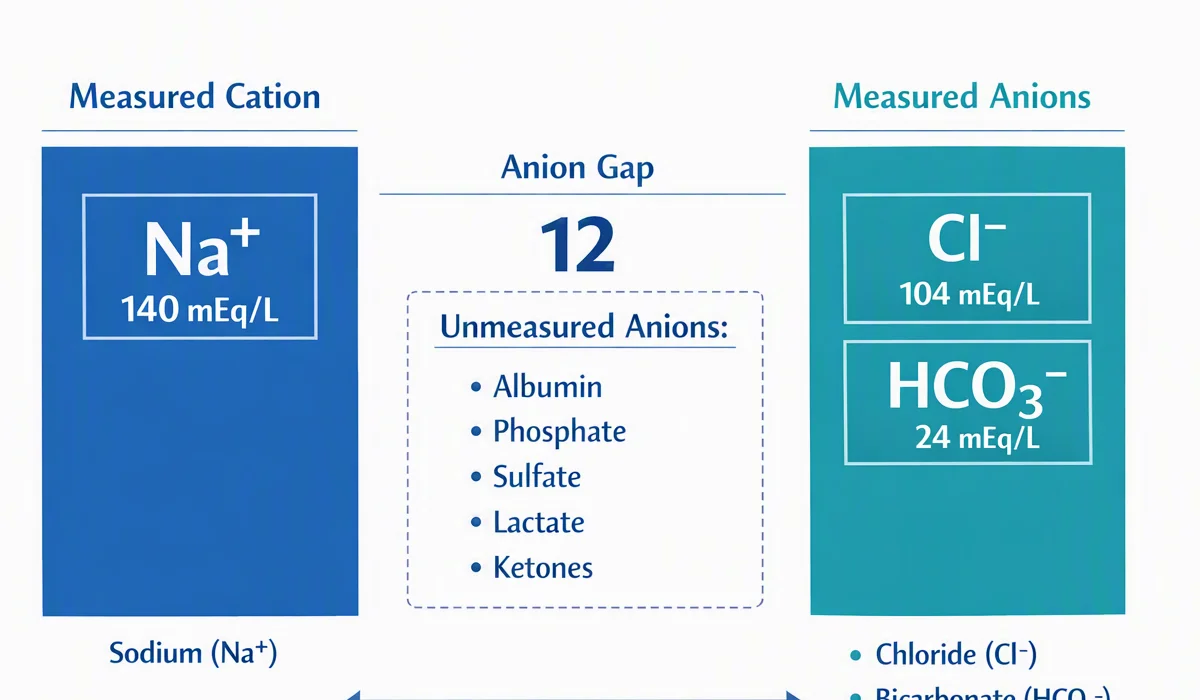
The anion gap is a computed value from a blood test that is used to assess acid-base balance and suspected electrolytes imbalances. It is calculated from common blood chemistry measurements, especially sodium, chloride, and bicarbonate, with potassium sometimes included depending on the formula used. Clinicians use it as a useful diagnostic marker for recognizing an acid-base disorder such as metabolic acidosis.
An Anion Gap Calculator is designed to help with this calculation and its interpretation, but the result only makes sense when you understand the measurement units behind the input numbers. The anion gap is not a direct measurement; it is a secondary number based on laboratory values from a blood panel. Because of that, the units used for each electrolyte and the consistency of those units play a major role.
At a simple level, the anion gap reflects the difference between measured positive and negative ions in the blood, which relates to electroneutrality. When there is an electrolyte imbalance, the gap can suggest an anion deficit or a surplus of unmeasured ions. That is why the result must always be considered in clinical context rather than as a stand-alone number.
Which measurement units get used in anion gap calculation?
The most common two standard units applied in anion gap calculation are mEq/L and mmol/L. In most settings, these are considered as numerically equivalent for the electrolytes used in the calculation, which is why many lab reports and calculators display the values in either unit without changing the number.
Sodium and chloride are typically reported in these same units, and bicarbonate is also commonly shown in the same format. Because the anion gap is built from these inputs, the serum concentration values must be matched. If one value is reported differently, the result may be misleading unless a proper unit conversion is done first.
In practice, an Anion Gap Calculator usually expects all inputs to be in the same measurement system. If the calculator is set up for mEq/L, the sodium, chloride, bicarbonate, and possibly potassium values should all be entered using those units. If the calculator accepts mmol/L, the same principle applies. The key is consistency across all laboratory values.
Most people notice that the numbers look the same in mEq/L and mmol/L for sodium, chloride, and bicarbonate. That is because for these ions, the charge relationship generally makes the values match in common lab reporting. Even so, you should never assume every analyte behaves that way. Good lab result interpretation depends on knowing what the lab is reporting and how the calculation formula was designed.
Why units count in an Anion Gap Calculator
Units matter because the formula only works correctly when the input values are aligned. If one electrolyte is entered using a different unit system, the calculator may still produce a number, but the result will not represent the true physiology. That can affect interpretation and lead to a mistaken view of acid-base balance.
The issue is particularly important in a tool like an Anion Gap Calculator, where users may be entering values from different laboratory values or different report formats. A single mismatch in measurement units can distort the result enough to hide a real metabolic disturbance or make a normal result appear abnormal.
Consistency is also vital when comparing results over time. If one blood chemistry panel uses a slightly different reporting style than another, trends may seem different even when the patient’s physiology has not changed much. This can affect the way clinicians view a possible anion gap range or a changing reference values pattern.
Understanding the units also strengthens the quality of lab result interpretation. The anion gap is a helpful clue, but only when it is read alongside the rest of the blood chemistry data, including the patient’s symptoms and other indicators. A correct number with incorrect units can still lead to wrong clinical conclusions.
How the anion gap is calculated
The usual calculation formula is:
Anion gap = sodium − bicarbonate + chloride
Some approaches include potassium, but most everyday calculations do not routinely. When potassium is included, the formula becomes:
Anion gap = sodium + potassium − chloride + bicarbonate
In either version, the serum sodium, chloride level, and bicarbonate should be in the same unit system, usually mEq/L or mmol/L. Because the calculation is based on subtraction, consistency is important. Mixing units can change the apparent gap and skew the diagnostic picture.
For example, if the sodium is 140, chloride is 102, and bicarbonate is 24, the calculation would be:
140 − (102 + 24) = 14
That result can be interpreted against the expected normal range or reference range used by the laboratory or the calculator. If potassium is included, the result would be slightly different, so users should always know which formula is being used by the Anion Gap Calculator.
Because the anion gap https://anion-gap-calculation.com/calculators/osmolar-gap.html is derived from a panel of electrolytes, it can indicate whether there is a hidden acid-base disorder. A higher-than-expected value may suggest unmeasured acids, while a low value may point to changes in albumin or other factors. That is why the calculation is often used as a screening clue in blood chemistry analysis.
Standard anion gap span and what affects it
The typical range for anion gap can differ by laboratory and by the specific formula used. Different labs may use distinct reference range standards depending on their analyzers and reporting conventions. That means a result that appears high in one place may be viewed as acceptable in another.
Albumin is one of the key factors affecting interpretation. Because albumin is a negative protein, lower albumin can lower the measured gap and hide an underlying problem. In such cases, clinicians may consider a corrected anion gap to factor in low albumin and increase the reliability of the result.
A change in the anion gap can be a clue to metabolic acidosis, but it is not proof by itself. The number must be interpreted in relation to other laboratory values, the patient’s symptoms, and the broader clinical context. For example, a patient with an apparent normal gap may still have an acid-base problem if the albumin is low or if other unmeasured ions are involved.
As a result, the anion gap range should be used as a guide rather than a stand-alone diagnosis. The most useful interpretation comes from combining the result with the rest of the blood panel, especially when the clinician is evaluating possible electrolyte imbalance or a metabolic disturbance.
Common mistakes when handling unit values
One major issue of the most typical errors is incorrect unit conversion. Users may enter sodium in an unit system and chloride in a separate system, assuming the calculator will adjust automatically. When not the tool clearly states that it performs conversion, the result may be incorrect. An Anion Gap Calculator should be used only after confirming the units used in the source lab report.
Lab reporting can also lead to confusion. Some reports present values in mEq/L, while others present them in mmol/L. If you compare results from different facilities without checking the reporting format, you may mistake a reporting difference for a real physiologic change. This can lead to inaccurate interpretation of the patient’s blood chemistry.
Rounding can matter too. Tiny differences in sodium, chloride, or bicarbonate can slightly shift the final result, especially when the anion gap is near the cutoff between normal and abnormal. While rounding is typical in routine lab reporting, over-rounding can blur the trend and make a slight abnormality less obvious.
Measurement error is another concern. Every laboratory test has some variability, and the anion gap reflects that variability from the individual electrolyte tests. Even a small inconsistency in one value can affect the calculation formula. This is one reason the result should not be interpreted in isolation.
To prevent these issues, confirm that:
- every electrolyte values are in the same units, usually mEq/L or mmol/L
- the calculator uses the same formula as the lab or clinician requires
- you confirm whether potassium is included
- the result is evaluated with the rest of the blood chemistry panel
- the number is interpreted in the right clinical context
When you should see a clinician
You should consult a clinician if the result is outside the normal range or if you have concerning symptoms such as breathing quickly, disorientation, strong nausea, vomiting, or unexplained fatigue. These symptoms may indicate a significant acid-base disorder that needs immediate evaluation. The anion gap is only a single part of the picture, and professional review is often needed to understand what it means.
Medical guidance is especially important if there is known or suspected kidney disease. Impaired kidney function can affect acid handling and the interpretation of electrolyte patterns. A clinician may want to look at all blood tests, kidney markers, and any variation in the anion gap range over time.
Immediate attention is also warranted if diabetic ketoacidosis is possible. This condition can cause a high anion gap and requires urgent treatment. The same is true when toxic ingestion is a concern, because certain poisons and drugs can create a dangerous metabolic pattern that may first appear as an elevated gap.
Even if you are using an Anion Gap Calculator correctly, a number alone cannot diagnose the cause. The best use of the calculator is to support conversation with a clinician who can review the full blood chemistry, the patient’s history, and possible causes of the abnormality.
FAQs
Which units apply in anion gap calculation?
The usual units are mEq/L and mmol/L. Input values for sodium, chloride, and bicarbonate should all follow the same units so the formula functions as intended. Most Anion Gap Calculator tools expect consistent measurement units and then deliver a result for interpretation.
Is an anion gap reported in mEq/L or mmol/L?
It may be reported in either mEq/L or mmol/L, depending on the laboratory and the reporting system. For the electrolytes involved in the calculation, the numeric values are often the same, but the label still matters for correct lab result interpretation. Always verify the report and maintain consistent units across the entire blood panel.
Does potassium need to be included in the anion gap formula?
Not in every case. Many routine calculations do not include potassium, while some versions do. Including potassium changes the formula slightly, so it is important to know which version your Anion Gap Calculator is using. If the calculator omits potassium, do not enter it manually unless the instructions specifically say to do so.
What is the normal anion gap range
The normal range can vary by laboratory, analyzer, and the exact calculation method used. That is why the reference range on the report matters. A value should be interpreted against the laboratory’s own standards, along with the person’s overall blood chemistry and clinical picture.
Can albumin influence anion gap interpretation
Yes. Albumin can significantly affect the result because it contributes to the body’s negative charge balance. Low albumin may lower the measured gap and hide an abnormality, which is why clinicians sometimes use a corrected anion gap. Albumin should always be considered when evaluating the result, especially if there is concern for metabolic acidosis or another metabolic disturbance.